Embedded terminal
A real PTY in your browser — xterm.js on the front, a persistent shell process on the server — so you can run tests, poke at git, or drive the Claude CLI directly without leaving the chat.
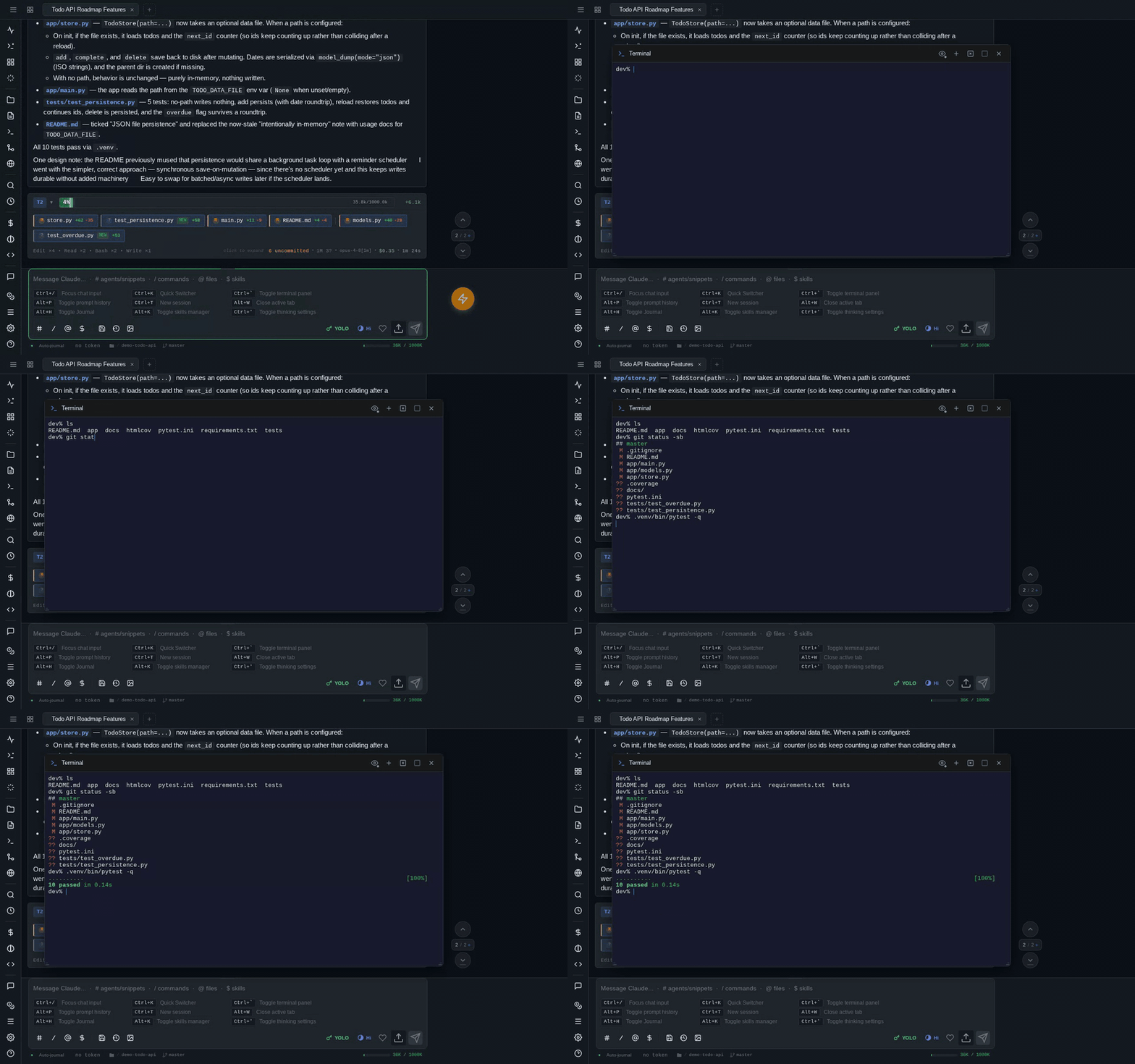
This is a real shell
The terminal is not a sandbox: it runs as the same OS user as the bridge server, with that user's full filesystem and network access. Anyone who can log into your bridge can run arbitrary commands. Read the security notes before exposing the server beyond localhost.
Opening and toggling
Press Ctrl+` or Ctrl+\ to toggle the terminal for the current session. It opens as a top sheet sliding down from the top on phones and tablets (drag between half and full height), and as a floating window on desktop. Either form can be promoted to a full tab in the tab strip — use the widget's transform controls or the + button in the terminal header, which opens a fresh terminal tab (Terminal 1, Terminal 2, …).
Ctrl+Shift+` (or Ctrl+Shift+C / Cmd+Shift+C) skips the floating stage and opens a new terminal tab directly. Terminal tabs live in the same unified tab strip as your sessions, so a shell can sit right between two conversations, and you can open as many as you need.
When you promote a floating terminal to a tab, the running shell and its scrollback move with it — nothing restarts.
A couple of desktop niceties:
- Right-click the floating terminal's header to save its current size as the default, or restore the configured default.
- Esc is deliberately passed through to the shell (so it works in vim, fzf, etc.) instead of closing the widget.
- Ctrl+C sends an interrupt to the shell; Cmd+C copies the selection (with soft-wrapped lines joined back together); Cmd+V pastes, honoring bracketed-paste mode.
Terminals survive the page
Each PTY is keyed to your session and working directory on the server, not to the browser tab. Reload the page, switch sessions and come back, or lose your connection — the shell keeps running, and the widget reattaches to it with scrollback intact.
If a client goes away entirely, its shells become orphaned terminals: still running on the server, just not attached to any window. A header button with a badge lists them; from there you can reattach any of them as a tab (Tab All grabs the lot) or kill them. The kill button in the terminal widget's header ends the current shell explicitly.
Each session gets its own floating terminal, opened in that session's working directory. Change the session's project and the terminal reconnects there.
Clickable output
Terminal output is linkified as you go:
- URLs open in a new browser tab — even when they wrap across multiple terminal lines.
- File paths (including bare filenames like
server.pyandpath:linereferences likesrc/app.js:42) are verified against the server and open in the file preview on click, jumping to the line when one is given. Ctrl-click (or Cmd-click) opens the file straight in edit mode. - Directories open in the file explorer instead.
Resolution is context-aware: it tracks the shell's live working directory (your cds count), and when you click a bare filename it also scans the lines above for directory context — so a filename in the output of ls docs/guides/ resolves into docs/guides/.
Logging into Claude from the terminal
The Claude CLI's OAuth login is interactive, so the /login slash command drops you into a terminal tab pre-typed with claude auth login — follow the prompts there. If the CLI hits an expired or missing token mid-session, the error card in the chat includes a one-click Login button that opens the same terminal. /logout mirrors this with claude auth logout.
Touch controls
On phones and tablets a Termius-style keyboard extension bar sits above the software keyboard, filling in what iOS and Android keyboards lack: Esc, Tab, Ctrl, Alt, arrow keys, common shell characters (| ~ / -), backspace, and a paste button.
Modifier keys have two modes:
- Single tap — one-shot: the modifier applies to the next key you type, then clears.
- Double tap — locked: stays active (like caps lock) until you tap it again.
Long-press keys for shortcut popups: hold Ctrl for a menu of common chords (Ctrl+C interrupt, Ctrl+D EOF, Ctrl+Z suspend, Ctrl+L clear, Ctrl+A/E home/end), hold Alt for word-editing chords, and hold the left/right arrows for Alt/Ctrl word-jump variants. Slide to an option and release, or lift your finger and tap one.
There's also a virtual joystick: touch the terminal and swipe about 20 px in any direction to summon a d-pad anchored at your fingertip. The direction you're holding auto-repeats (great for scrolling through shell history or a pager); drag toward another arrow to change direction, release to dismiss. A quick double-tap on the terminal sends Tab for shell completion.